Thursday, November 5, 2009

The White Castle

                  The White Castle by Orhan Pamuk is the book that I chose for the Turkey group.  I have not quite finished it yet, but am over half-finished.  The writing style reminds me of old British literature, and because of this I have greatly enjoyed it. 

                  It was surprising to me that the main character is not actually Turkish or Muslim.  When Hoja was first introduced, I imagined that the storyline would be something along the lines of “long-lost twins reunite.”  I thought the story took an interesting turn when the two look-alikes become master and slave instead of royal relations.  Hoja’s behavior toward the main character (does anyone know his name???) was especially shocking to me; he was quite psychotic!   I had hoped to admire his character, but as soon as he commits any kind action, he does something doubly worse!

                  The bubonic plague part of the novel is fascinating.  I never realized that it affected Turkey; I had always thought of Western Europe as being the only place it was heavily present.  Hoja’s behavior here was shocking as well, when he purposely scares the main character and even tries to infect him with the deadly disease.

                  The most fascinating aspect of the book to me so far has been the Muslim-Christian relations.  The Muslim Turks continually try to convert the main character, punish him when he rejects Islam, but also somewhat respect him for being faithful- even willing to die for- his religion. 

                  It has been hard for me to read long portions of this book in one sitting.  I really enjoy the book, but I think that it has such a depressing tone that it is hard to take too much in at one time.  But I cannot wait to see how it ends!


Wednesday, November 4, 2009

Turkey!

The Bus Driver Who Wanted to Be God had some interesting stories in it.  I actually did not enjoy it as much as everyone else seemed to enjoy it, but did find some of the stories to be “cute,” for lack of a better word(!).  Mostly, they were just shocking to me!  Especially the fact that these stories were Israeli!  They sounded more American, a point that proves the many similarities between Israel and America.  The “cutest” story, in my opinion, was the short story about the little boy and his piggy bank.  This short story, and a few other more children-like stories, seemed out of place with stories like “Kneller’s Happy Campers.”  It was a little odd to see all of these unrelated stories that were meant for many different age groups lumped together in one book.  As far as teaching them to high school students, some of the material would probably be offensive.  But then again, the piggy bank story is a classic for all ages!

It is neat that we started the Turkey group last week, because I am also reading a couple of other Turkish texts for another class right now.  I read most of Memed, My Hawk, and a few other short stories.  The other class also had a Kurdish speaker come, who grew up on the Turkish countryside in a small village- Dr. Mirzeler.  Finally, we also watched two documentaries, one on the infamous honor killings in Turkey, the other about the banning of the headscarf. 

One thing that was new to me that the group talked about last week was the Armenian genocide.  I had probably heard about it before, but it was fascinating to learn more about what happened, and to hear Lauren’s relatives’ stories.  I am also enjoying the book that I am reading, The White Castle, and hope to finish it tonight!

Wednesday, October 28, 2009

The Ottoman Empire


                  The powerful Ottoman Empire lasted from 1300 until 1923, over six hundred years.  It was the most powerful in the world at that time, with 30-35 million people under its rule, and an army of approximately 100,000 people.  The Ottomans defeated the Serbian Empire (the Serbs were Greek/ Orthodox Christians), and the Byzantine Empire, and among their conquests were Egypt, Syria, Arabia, and the Balkans.

Osman founded a Sultan dynasty of ten rulers around 1300.  The Sultans were mostly good leaders, though all under them were considered both slaves and family (not quite sure how that worked!).  The Sultans’ palace was also the place that held a harem of 2000 women.  Another famous sultan was Sulieman the Magnificent (1520-66), who was sultan and caliph, and who claimed the leadership of Sunni Islam.

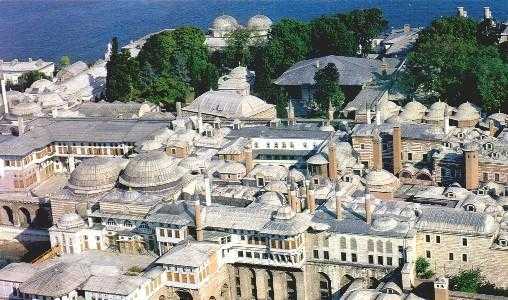
Topkapi Palace was the center for Ottoman Power, and was in Istanbul, or Constantinople, as it was called before the Turks conquered it from the Byzantine Empire in 1453, under Mehmet II.  The Topkapi Palace’s kitchen fed 5,000 per day, and 10,000 per day if there was a banquet.  The grounds were 7.5 million square feet, and contained 10 mosques, 14 bathhouses, 2 hospitals, 4,000 horses, and a Janissary Barracks. 

One interesting thing is that I found about the Ottoman Emipire was their Janissary Corps.  This corps was made from the “boy tax,” or devshirme, a tax that was put on the Balkan Christians.  The boys were converted to Islam, educated, and rose to the top as viziers or as part of the Janissary Corps, which was an elite group of soldiers who were not allowed to marry or own land.  Some Christians resented this “boy tax,” while others saw it as a chance for their boys to advance.  Eventually, the Janissary Corps became discontent, grew very powerful in the government, and eventually were eliminated because of their strength and mutiny against the government.

Monday, October 26, 2009

Israeli Movies

                  Time of Favor was an excellent film.  Unfortunately, I was not able to watch the entire thing, and could not get a hold of Beaufort, either.  But what I did see of Time of Favor, I thoroughly enjoyed.

I cannot remember all of the characters names, so you will have to bear with me- the only names that I can remember are Pini and Menachem.  My favorite character was Menachem, and I did not know what to think of the girl (I cannot remember her name).  I despised Pini.  I say that I “liked” the characters, because to me, this movie was slightly more Hollywood-like than was Paradise Now.  This movie had more of the traditional “happy-ending” with the good characters becoming heroes.  It was nice to see a happy-ending again for a change, I have to admit!

                  It was enlightening to hear what other people had to say about the movie during our class discussion.  I especially think that the parallel that was drawn between Paradise Now and Time of Favor was especially enlightening.  Though the issues addressed were slightly different in each film, the fact that both movies’ plots centered on suicide bombers on either side made them complimentary to one another. 

                  What made me slightly uneasy in class was that we seemed to keep coming back to the Palestinian plight, rather than really keeping focused on discussing what might be troubling the Israelis right now.  I think it is necessary that we discuss both sides evenly, one unit discussing the Palestinians and one unit discussing the Israelis, and not give one side more credit or time than the other.  The class as a whole seemed to more readily denounce Israeli literature as biased, but was not as hesitant to accept Palestinian literature as the same.  Not that I think Palestinian literature is unimportant; on the contrary, it is very important.  But so is Israeli literature.  Just because Israeli literature does not present the opinion that one agrees with does not mean that its opinion is not valid.  And just because Palestinian literature is “new” to many of us does not necessarily discredit the opinions of other more-commonly-read literature.  I hope I am not misunderstanding what was said or implied in class; I only thought that this was something that should be brought up.


Wednesday, October 21, 2009

Elie Cohn


                  The second story that I had chosen for my outside reading had been one titled The Lemon Tree.  But half way through my first book, I came across a book in one of my storage boxes, one that had been given to me a long time ago.  (Don’t you just love when you come across something at just the right time!?)  The story is called Our Man in Damascus: Elie Cohn, written by Eli Ben-hanan.  It’s description is accurate: “the thrilling, shocking, true story of Israel’s most daring spy.”  This story redeemed my outside reading, because at that point I was disappointed and bored with my other book (which I had to get very far into before realizing my disappointment in it!), and I was having trouble finding any films to watch.  But because espionage stories have always thrilled me, this book perked my interest!

                  The story is just as the description, an inside story on the life of an Israeli spy and his vital mission in Syria.  The front cover gives the end away- it shows Elie being hanged, with a huge sign and big Arabic letters on it.  The story was published and printed in Israel and is set in the 1960’s.  Elie’s mission involves becoming intimate friends with the Ba’ath supporters in Syria, who ultimately overthrew the then current Syrian government.  This Ba’athist coup threw Elie into a position of being close friends with the new President and all of the main government officials.  From what I understood in the story, the Ba’athists posed more of a threat to Israel, and by becoming close friends with the new Ba’athist leaders, Elie obtained crucial and top-secret information from them that he transmits back to Tel Aviv.  This detailed information assured some of Israel’s victories over Syrian-planned attacks.

                  The book is very interesting, but it shows more of the war side of Israel than the culture or religious side, only because it is a short book focused on a spy.  I am also not sure how to get multiple copies of the book, since it was given to me.  But I definitely recommend it to anyone studying Israel who is interested in espionage!

Ps- this is a link to a little history of Elie Cohn:

http://www.jewishmag.com/67mag/eliecohn/eliecohn.htm

Monday, October 19, 2009

Outside Films

                  For my outside film viewing, I watched a couple of documentaries on issues pertaining to Israel and a film titled The Band’s Visit. 

                  The most interesting documentary that I watched was one titled Women of the Wall, a documentary that I picked up at the WMU library.  This is a film chronicling the struggle for women’s rights in the state of Israel, particularly women’s rights to pray in public at the famous Kotel, or Western Wall.  The women in the film go against tradition by wearing the prayer rug and other religious articles that only men traditionally wear, and by carrying and reading from the Torah.  Before this film, I did not know much about these Jewish traditions, and did not realize that Jewish women still did not have as many religious “rights” as Jewish men.  The women in the film meet once a month to pray as a group at the wall, even though it is against the law.  When I looked to see if women had been granted these rights since the time of the film (made in 1999), I discovered that they had not, though they continue to meet once a month and on certain other holidays, such as Purim.  The Supreme Court in Israel had actually granted them these rights for about four days, but the state overruled the court; now women’s communal prayer is “punishable by a fine and seven years in prison.” (see link below)  These facts were very surprising to me, since I had thought that women enjoyed equality in Israel.  Some fascinating information about the Women of the Wall group can be found at this link: http://www.jewishvirtuallibrary.org/jsource/Judaism/WOW.html

                  The film The Band’s Visit is about an Egyptian police orchestra that is invited to perform at an Arab culture center in Israel.  The band members have trouble pronouncing the “p” sound, and end up in a different town than they plan because of mispronouncing the town’s name (Arabic has no “p” sound, only a “b” sound.).  The band members end up staying with some locals in the small town, and the story is a tender portrayal of the humanness of the Egyptian and Israeli people.  The traditional strife between the two cultures is somewhat eliminated by the sharing of music, and by interacting with one another on an individual basis.  

Wednesday, October 14, 2009

A Pigeon and a Boy: Almost Finished!

            I have had fun with my outside reading for my group, the Israeli group, but have also been slightly frustrated.  I am reading the book A Pigeon and a Boy, but am now disappointed in it, even though I am near the end.  The book is not what I had expected; it is a little too graphic for my taste, and the story is quite odd. 

                  A Pigeon and a Boy was written by Meir Shalev, and fluctuates between two stories.  The first story is written in the first person about a character named Yair Mendelsohn and is a narrative of his fairly normal, daily life.  The story begins when Yair is a child, and continues until he is a grown man who has a job as a tour guide and who struggles with a failing marriage.  The second story is about two characters called “the Baby” and “the Girl,” two child pigeon raisers who meet and fall in love.  The chapters alter back and forth between the two stories, but the reader does not see the significance of the second story, and how it intertwines with the first story, until near the end of the novel. 

Yair continually addresses his mother as the reader of his tale, though his mother has already passed away.  Two important facts that Yair restates often are the fact that he looks very different than the rest of his family and the fact that his mother did not always have a happy marriage with her husband.  This unhappy marriage seems to affect Yair later in life when he suffers from an unhappy marriage as well. 

I did not think that the novel was teaching me much about life in Israel, but maybe that is because life there is not drastically different from life in America, or any other Westernized country!  What the book has given me is much information on pigeon raising!  Hmm, not quite what I expected!!!